
The hidden fire hazard is the one behind the dryer.
Lint Extractors exists because of a dryer fire. Here is what to watch for, and what actually happens when Steve clears a duct.
“In 1986, I started Lint Extractors after a neighbor had a fire in their dryer.”
Forty years later that is still the entire point of the business. Every load of laundry sheds lint. The trap catches some of it; the rest goes into the duct and stays there, packing down a little more each time.
What ends up in the wall is dense, dry and warm, sitting next to a heat source that runs for hours a week. Nothing about it is exotic — which is exactly why it gets ignored until it isn’t ignorable.
The National Fire Protection Association publishes its research on this, and it is worth ten minutes of anyone’s time: Home fires involving clothes dryers and washing machines
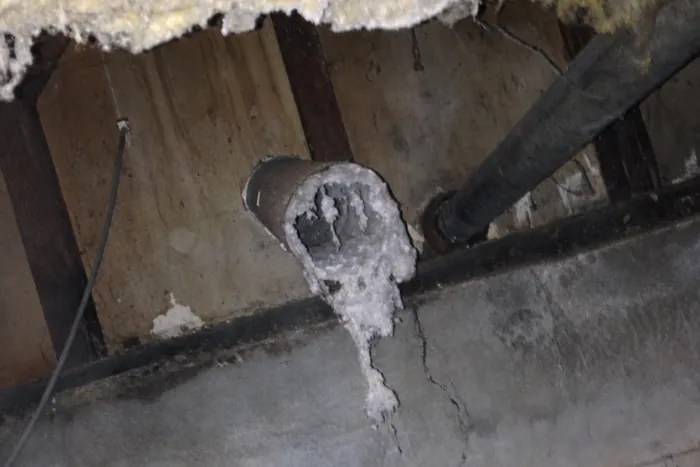 One of Steve’s own job photos — a crawlspace duct packed
completely solid.
One of Steve’s own job photos — a crawlspace duct packed
completely solid.
How to tell your duct needs attention.
You don’t need to open anything up. The dryer tells you.
Loads take two cycles
The clearest early signal. If clothes that used to dry in one cycle now need a second, the exhaust isn’t leaving properly.
The dryer runs hot
A machine that can’t vent traps its own heat. The top of the dryer, the clothes coming out, or the laundry room itself all feel hotter than they should.
Your power bill crept up
A dryer fighting a blocked duct runs longer for the same load, every load, all year.
Lint around the hood cap
If lint is collecting on the outside wall around the vent — or the louvers barely move — the run behind it is carrying more than it can clear.
Nothing coming out outside
With the dryer running, you should feel steady warm air at the outside cap. Weak flow or none at all means it’s blocked somewhere between.
It has simply been a while
Lint builds with every single load. Clearing it is maintenance, not a repair — the point is to get to it before it becomes one.
Recognize two or more of these? That is the call to make. (415) 461-1489
What a clean-out actually involves.
In Steve’s own words — because the method is the reason it works.
-
1
The appliance comes out
“My process involves removing the appliance to get clear access to the duct.” Cleaning the first six inches from the front is not cleaning the duct, and that is where a lot of cheap jobs stop.
-
2
Brushes and flexible rods, the full run
“I use a series of brushes and flexible rods to loosen up lint and debris before vacuuming it all away.” The rods follow the duct wherever it goes, including the awkward runs.
-
3
It gets vacuumed out, not pushed along
Everything loosened comes out of the system rather than moving further down it. There are instances where he can do the whole job from inside the house.
-
4
The hood cap gets checked
The outside cap is where blockages start. If it needs replacing, a louvered cap — one that works like a plantation shutter — keeps air and lint moving instead of catching them.
-
5
He leaves it better than he found it
“No matter what, I always make sure to leave things better than I found them.” The machine goes back where it belongs.
Seen it on YouTube? A word before you try.
YouTube and TikTok make a duct clean-out look like a ten-minute job. Steve sees how that goes: he’s called out all the time to retrieve brushes that customers broke off inside the duct trying to do it themselves — so what started as a cleaning becomes a recovery job.
“You don’t tune up your own car — so why would you try to do this yourself?”— his standing answer
Do-it-yourself has its place: a monthly pass behind the lint screen — that is exactly what his $20 brush is for. The full run, dryer to outside wall, is what he brings the rig for.
A few straight answers
- How often should this be done?
- It depends entirely on how much laundry the household does and how long and awkward the duct run is. Rather than quote you a number that may not fit your house, call and describe the setup — Steve has been reading these for forty years.
- What does it cost?
- Duct cleaning is charged as a flat fee, and you get the number before he starts. Repairs and replacements depend on what the run needs, so those get quoted once he has seen it. There is a standing $10 off duct cleaning — mention it when you book.
- Can I just clean the duct myself?
- Behind the lint screen — yes, monthly, and Steve sells the brush for it. The full duct run — honestly, no. He regularly gets called to fish out brushes that broke off inside ducts on do-it-yourself attempts. As he puts it: you don’t tune up your own car.
- Do you do apartments, laundromats and hotels?
- Yes. Residential and commercial both — laundromats, dry cleaners, hotels, hair salons, gyms, and the shared laundry rooms in condos and apartment buildings. If it runs a dryer, it’s his kind of job.
- Do you clean home air ducts or HVAC?
- No. Clothes dryer venting only — cleaning, repair and replacement. No carpets, no chimneys, no gutters, no home air ducts.
- Will someone else turn up instead of Steve?
- No. “I never subcontract to other people or entities.” The person who quotes the job is the person who does it.